

A warm welcome - Safari tent, fire bowl and campfire
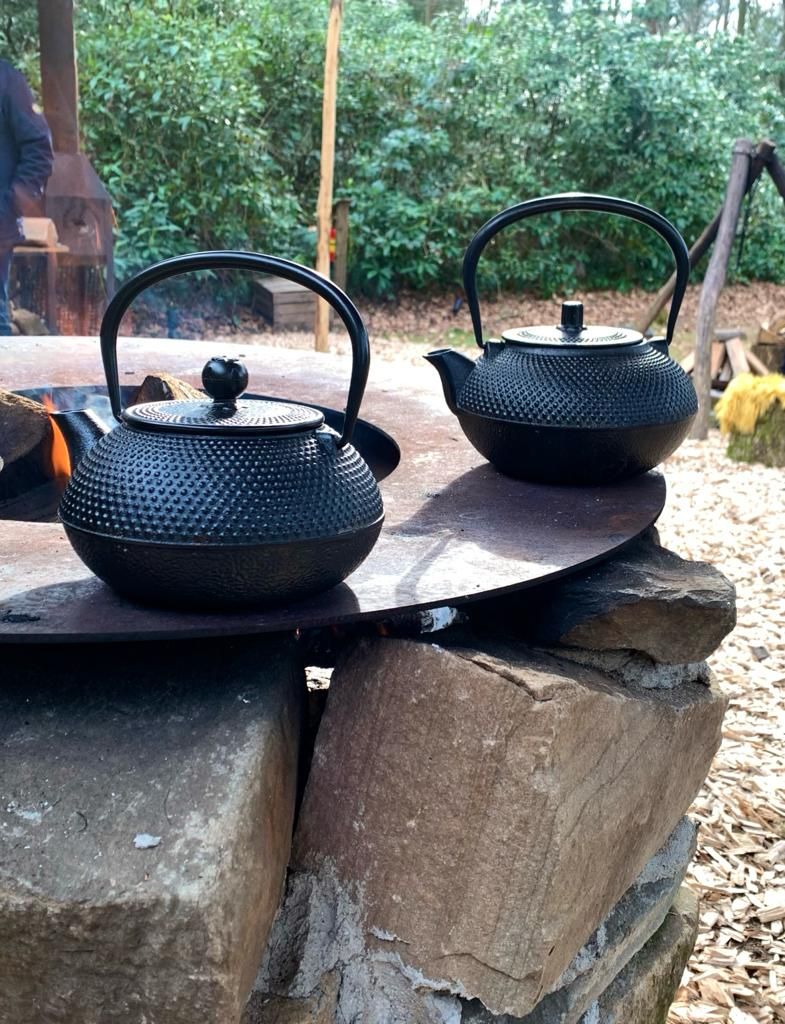
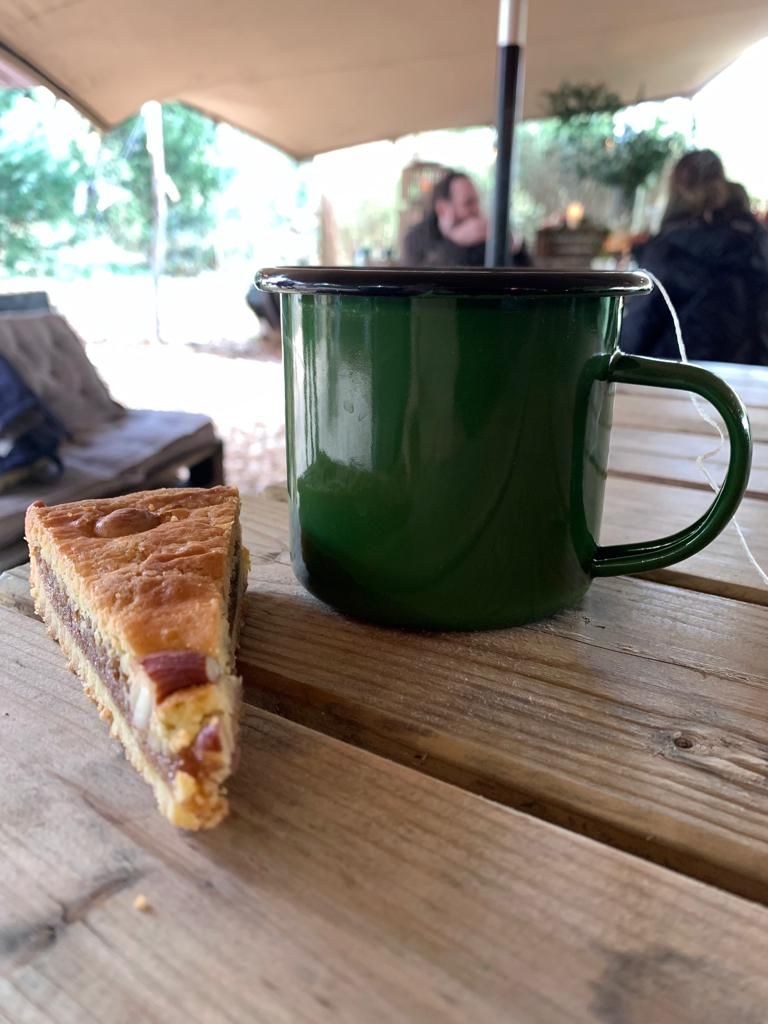
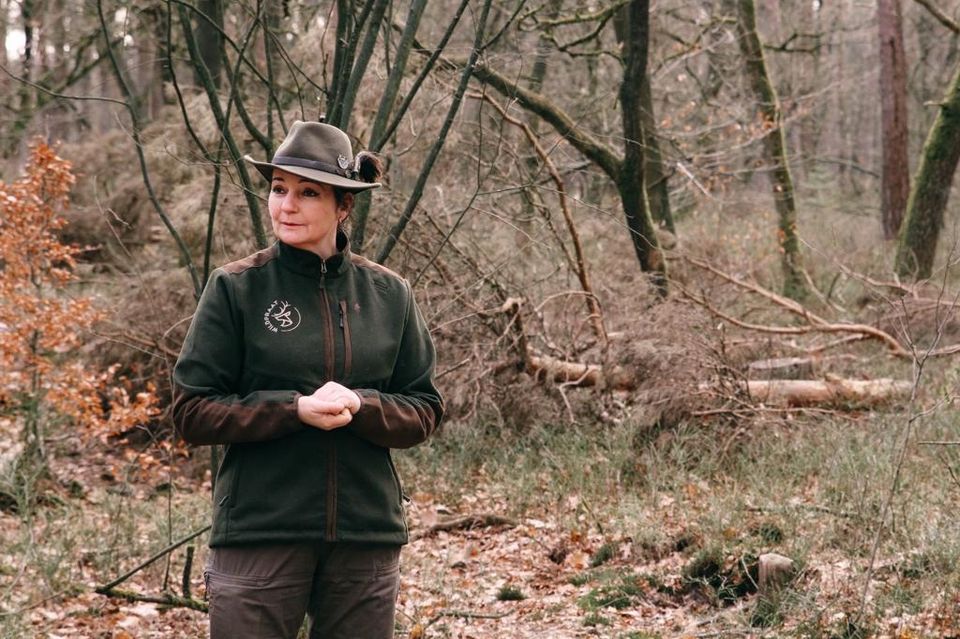
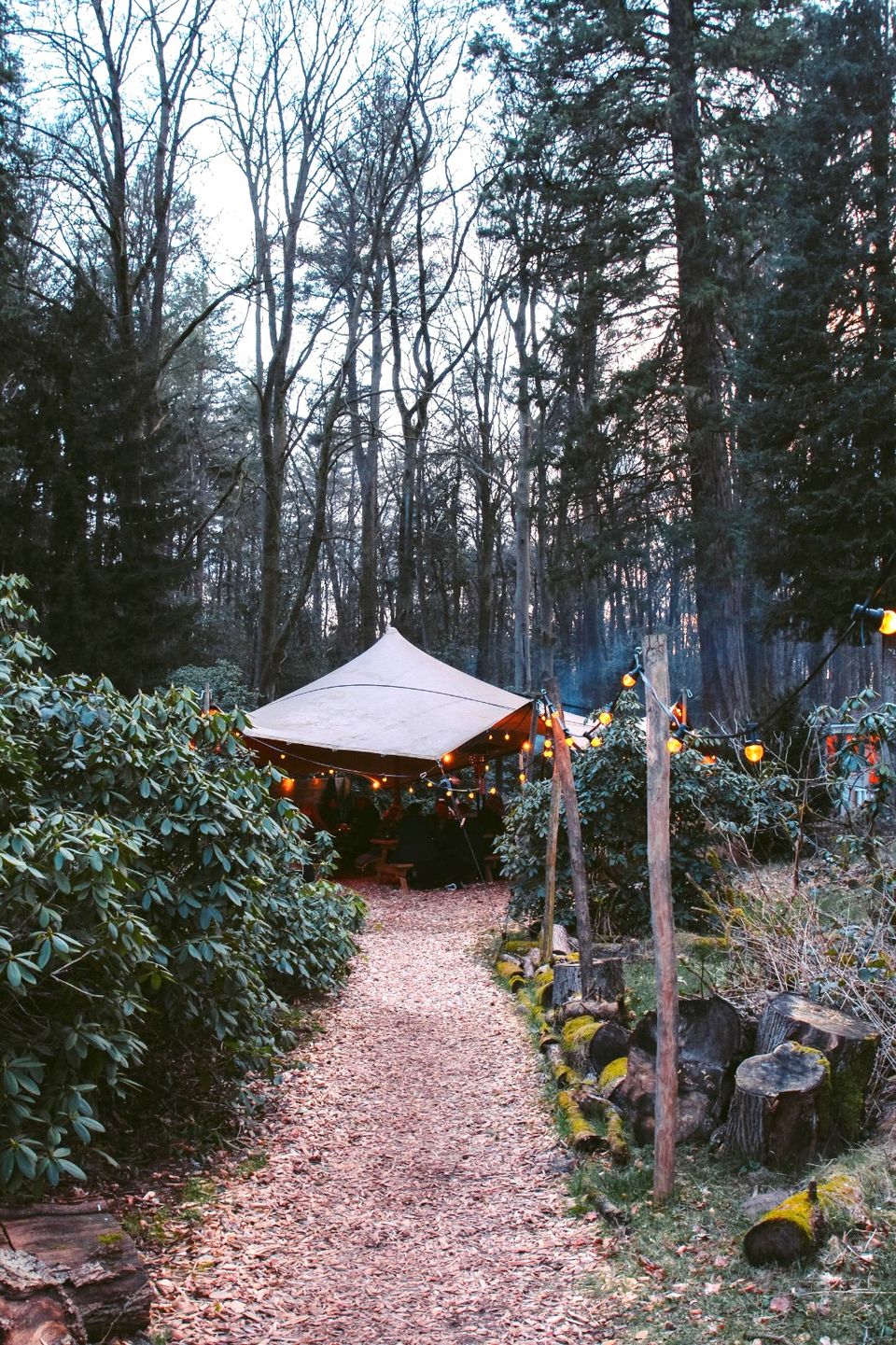
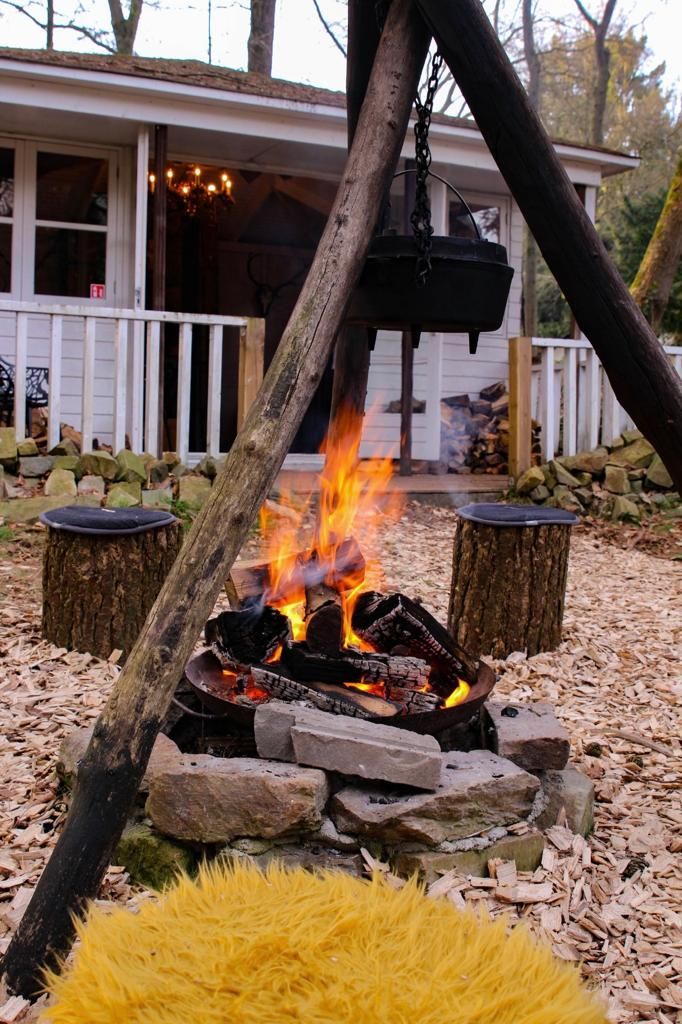
We arrive at a large safari tent bordering the forest. I see young and old mixed together. They are exploring the grounds and chatting. Near the fire pit, I see a woman in hunter's clothing. With her I must be, I think. We are welcomed by hunter and Fauna Manager Jacqueline with a cup of tea from the firebowl and a home-baked cake.
Wildpraat is an organisation that likes to convey their passion for the Veluwe and wildlife during a wildlife excursion through this special nature reserve. Together with the forester, you set off to learn all about the wildlife and the environment, and then enjoy a delicious meal together around the campfire. Wildpraat is consciously committed to creating understanding for nature and healthy eating. They do this by serving wild and organic meat at dinner. Because yes, if you want to eat meat then do it this way.
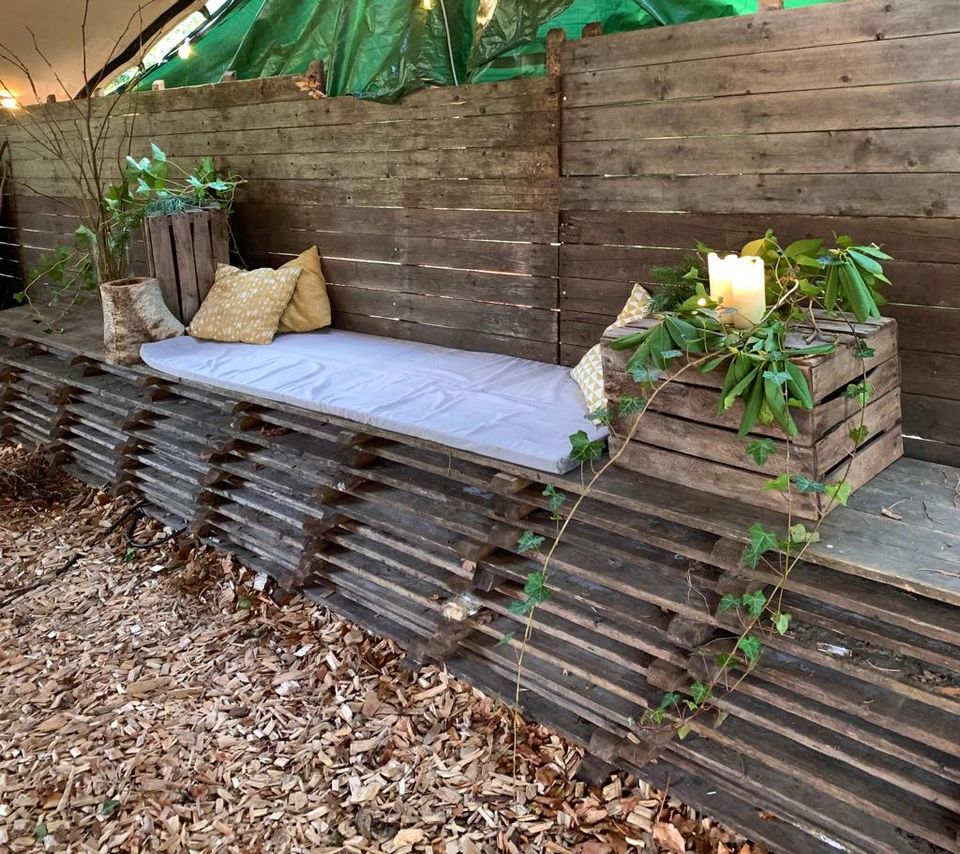
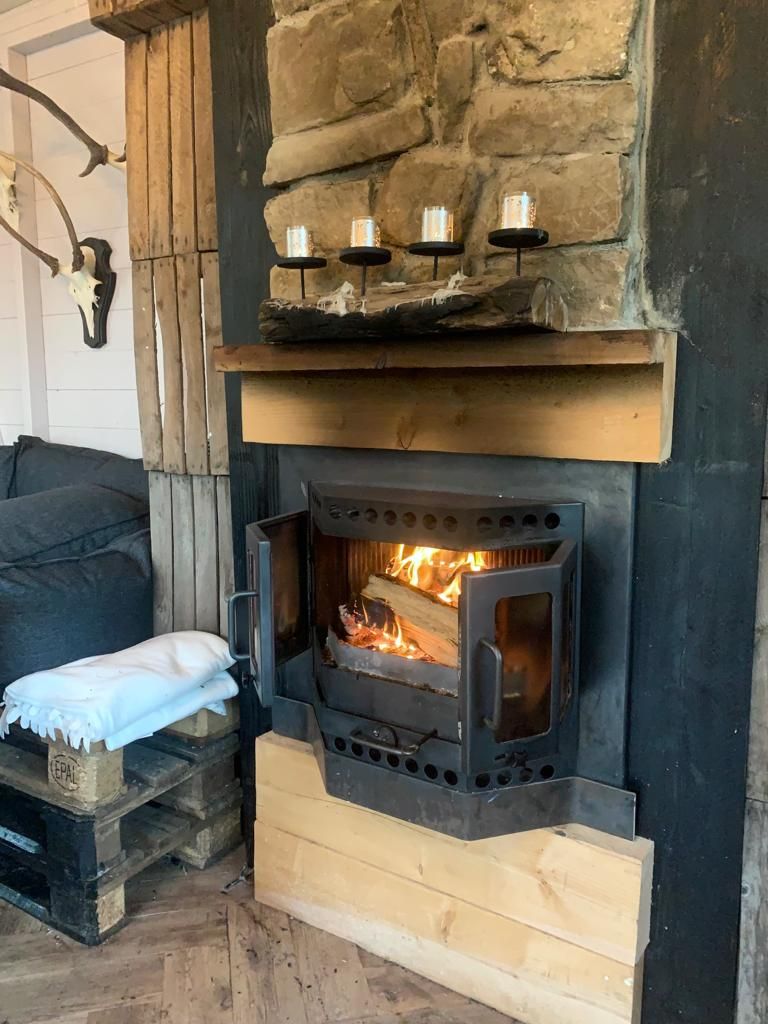
As I settle myself on a picnic bench, I look around me. I see a campfire surrounded by inviting tree trunks with coats of fur. The tent is full of cosy seating areas, picnic benches and a large table on which tonight's food will be set. Black teapots are kept warm on the firebowl. I also see the barbecue already set up. I take a sip of my tea and feel myself landing in the outdoors.
The wonders of nature - All senses on edge
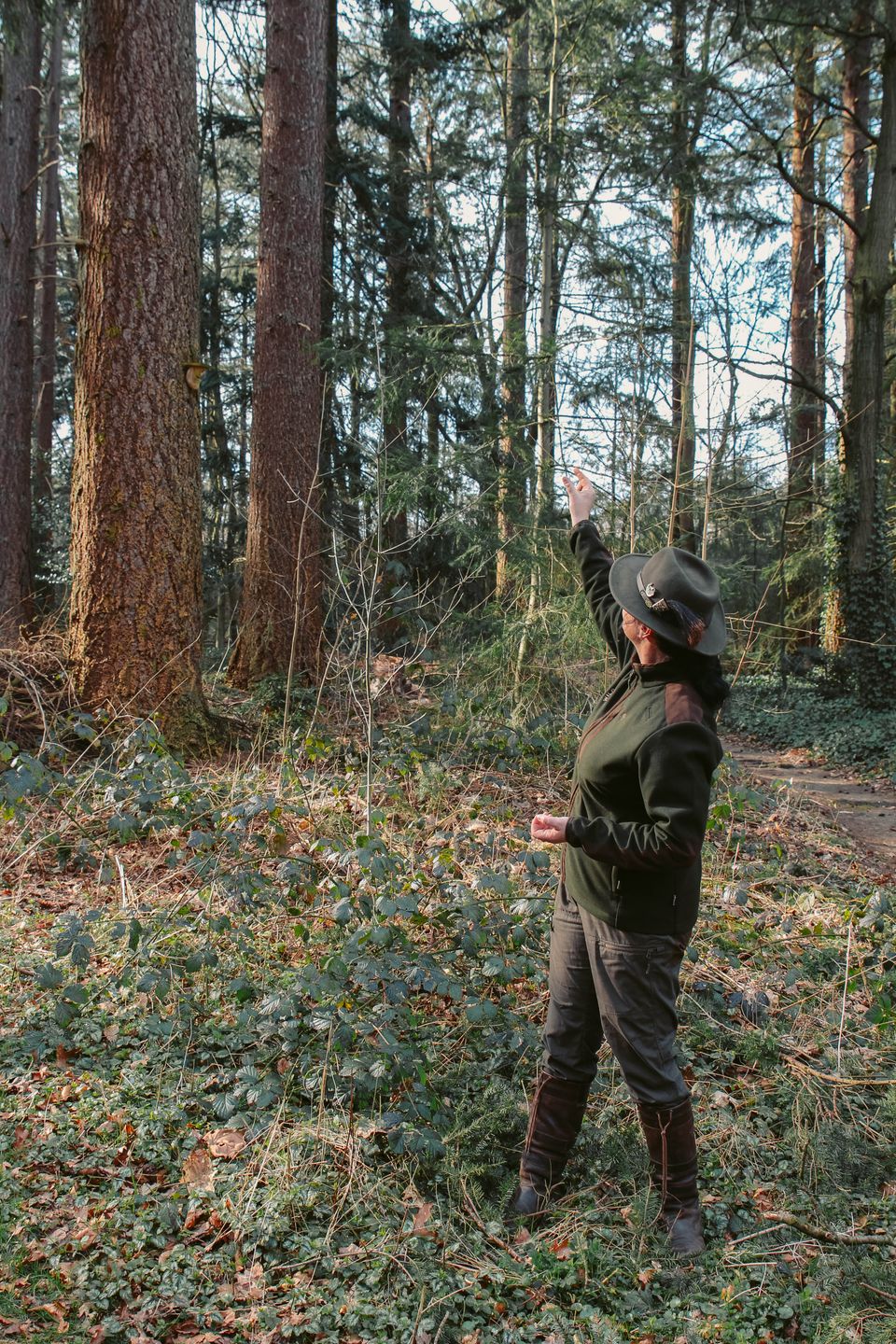
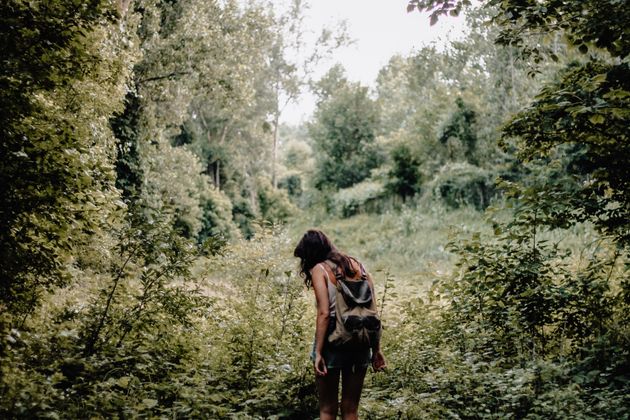
Hunter and fauna manager Jacqueline leads the way into the forest adjacent to the site. Immediately we stop at a very large tree. Jacqueline explains that this is a Sequoia, or giant sequoia. I look up and try to find the highest point.
Somewhere among the branches and leaves I manage to spot it. Suddenly I realise that trees are actually so magical and can be an example for many. They always seem to just stand naturally, but so much more happens. A tree is deeply rooted and completely in touch with Mother Earth. They 'just' stand there and be. When I turn my attention back to the story, I hear Jacqueline say that this tree is already 150 years old.
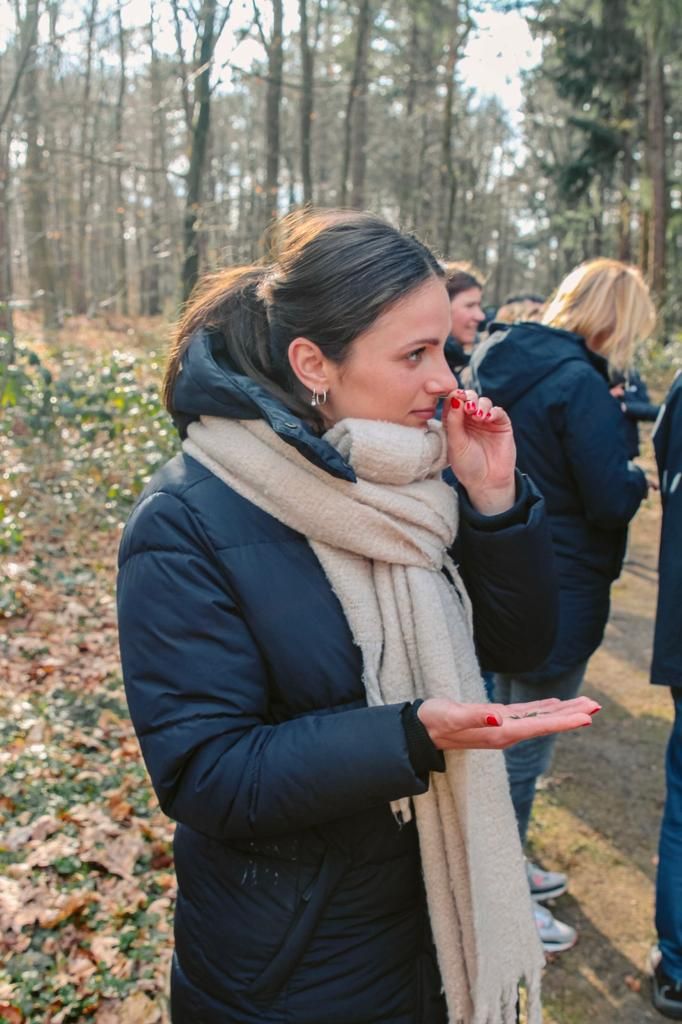
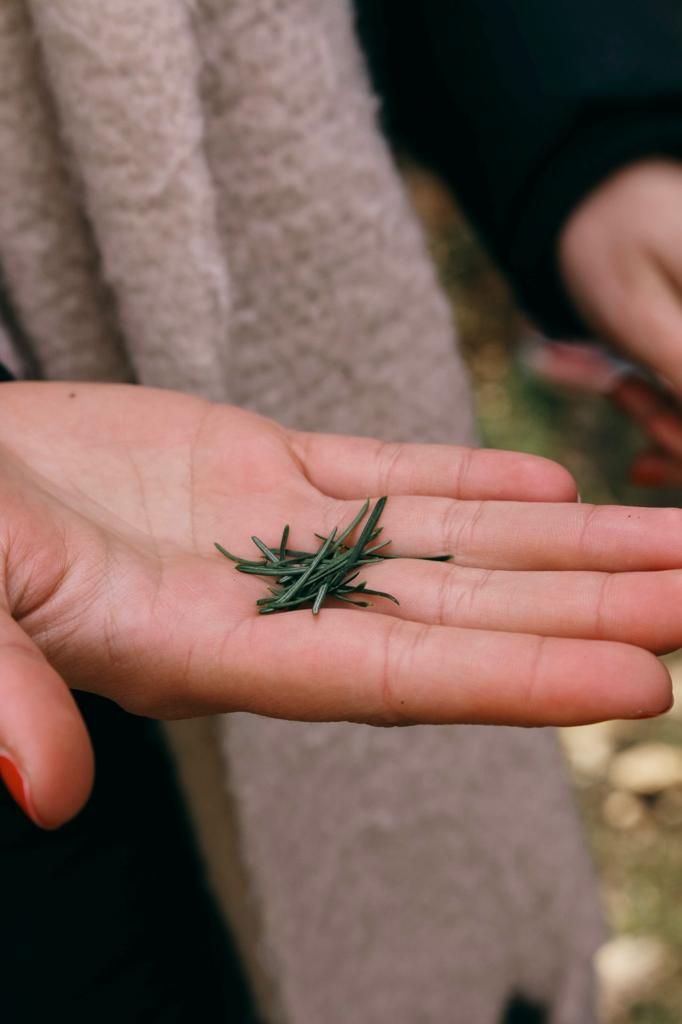
We walk on. The group stops when Jacqueline goes off the path and starts picking at a tree. We look like a bunch of herd animals that automatically respond to the leader. All of us get some needles in our hands. While handing them out, Jacqueline tells us that these are the needles of a Douglas tree. She asks us to rub the needles between our hands and tell her what we smell. I start rubbing my hands back and forth fleetingly. I hear the surprise in the people around me, bring my hands to my face and smell it. Wow! This smells like citrus! Again I start rubbing and smelling. As if I am in the middle of a perfume shop.
In search of traces - A wildlife experience on the Veluwe
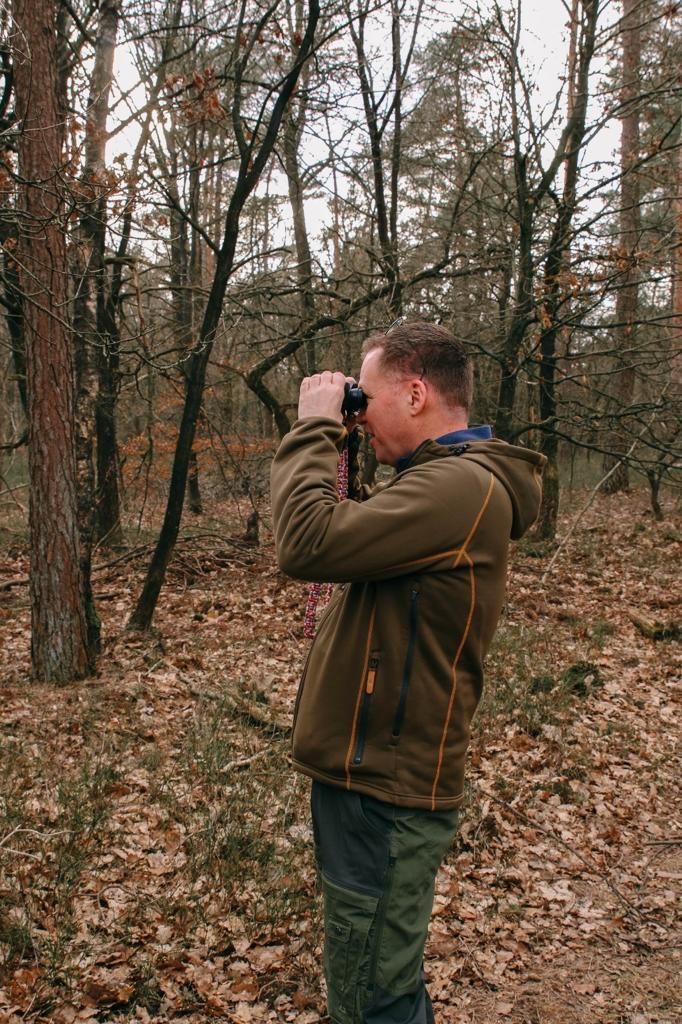
We walk out of a gate and onto a large footpath. In the distance, I see people walking and mountain bikers skimming past. Two horses with a cart pass us. In the middle of the path, the group comes to a halt again. Jacqueline starts talking about the wildlife that lives on the Veluwe. You find mainly red deer, wild boar and roe deer here. The wolf is also being spotted more and more often. Although the wolf is a very cool animal, I learn that it can also be a danger here in the forest. This is because wolves eat roe deer, young red deer and boars. This changes the habitat on the Veluwe. For the hunters, but also for the animals themselves. Game behaviour is changing: they are becoming more cautious and shy.
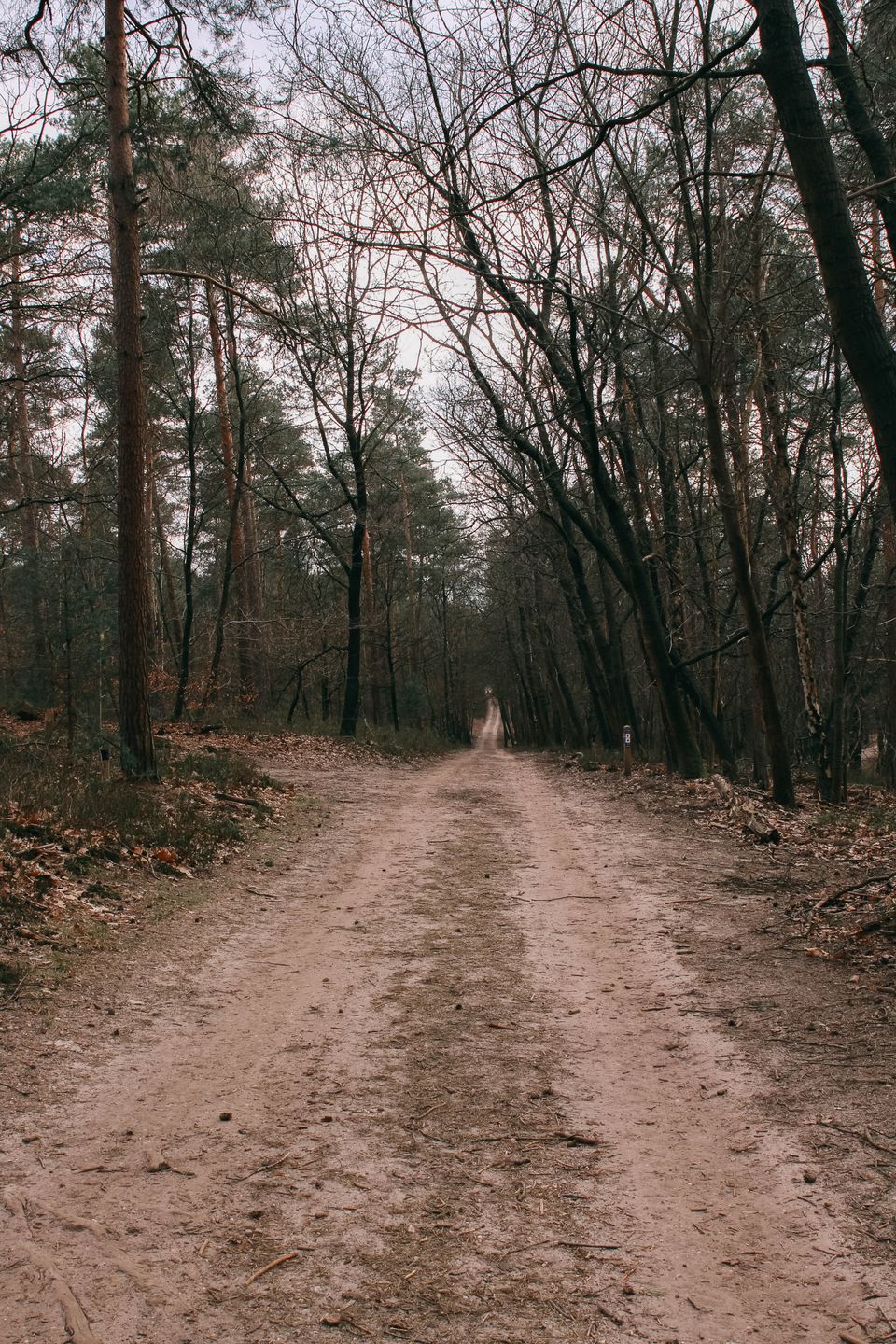
On the same stretch, Jacqueline shows us the wildlife crossings. A game turnout is a path used by animals to get to a certain location. For example, at a resting or watering place. To my left, I see a faint path running about 30 centimetres wide. There are few leaves and branches on the ground. I look in the distance to see if I can spot an animal, but in vain.
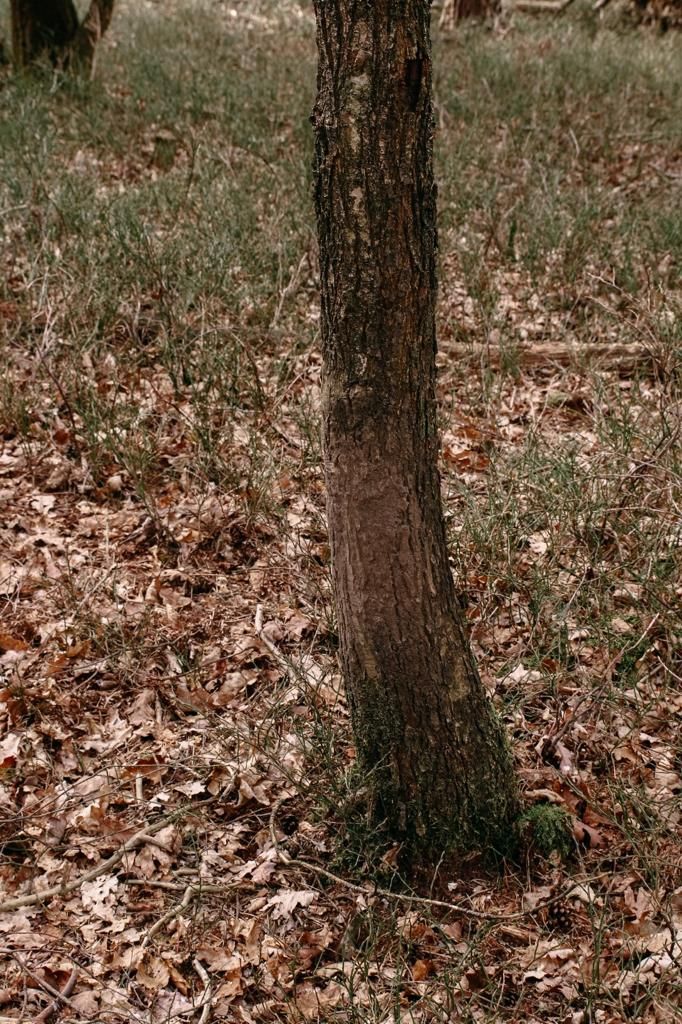
A little further on, we arrive at a mud puddle. Jacqueline points out a footprint of a wild boar to us. ''Probably from this morning,'' she says. We are asked if we know why boars and pigs take mud baths. Someone says: ''For cooling''. Another I hear say ''Because of parasites''. Both answers turn out to be right. Jacqueline explains to us that a mud bath is indeed cooling, but also healing. This is because wild boar's fur contains parasites. These end up in the mud while soaking. After drying, they rub the fur clean against a tree. I walk to the tree that Jacqueline points out on which there is a bald spot with white dots.
A special profession - The life of a hunter
Hunter and wildlife manager Jacqueline tells us at the end of the walk what hunting really means. Hunters are not people who do not love animals. On the contrary. On the contrary, they are very conscious people who know exactly what they are doing. Hunters hunt with the utmost respect for animals and nature. Twice a year there are counts on the Veluwe. Then they count how many animals there are and which species. A certain percentage of these have to be shot to balance the interests of humans and animals. The number of animals the hunters have to shoot is determined by the province. It depends on the pressure on vegetation, survival of other animals and road safety. Ultimately, it is about creating as much biodiversity as possible, appropriate to the type of landscape. All the different interests are weighed up and examined on an ongoing basis. With this, the province makes a 5-year plan in which they decide on management of nature and wildlife. This is a complex process in which they want to intervene as little as possible.
For a moment, I reflect on what we have just been told. It is quite a lot. I have to say that my understanding of them has grown this afternoon. But not just for the hunters. Also for the beautiful animals and nature. A sense of gratitude surges through my mind. Grateful that the hunters provide healthy and conscious meat on my plate. Grateful that I get to enjoy this. But also that I was given the chance to experience this wildlife experience on the Veluwe, to gain knowledge and increase my awareness. With a satisfied smile on my face, we all walk back to the game lodge, where we are welcomed for a grandiose dinner.
An organic and conscious dinner - A taste of the wild
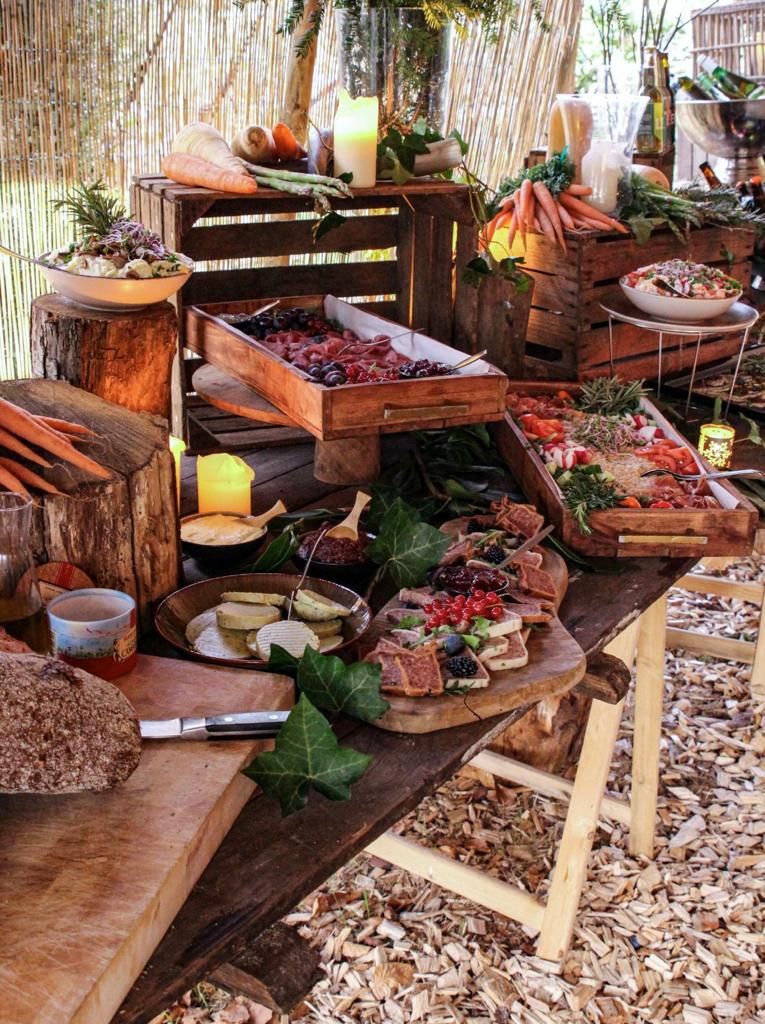
Back at the castle, I see the tent illuminated by lantern lights. The campfire is cosily lit and the barbecue is already burning well. The sun slowly disappears behind the trees and everyone settles down around the campfire and under the tent. We are welcomed with a Veluwe amuse bouche. A piece of wild boar pâté served with cranberry jam. Under the tent, I see a large table filled with beautifully prepared dishes and drinks. Salads, breads and wafer-thin slices of game meat. I can hardly believe my eyes from all the goodies I see.
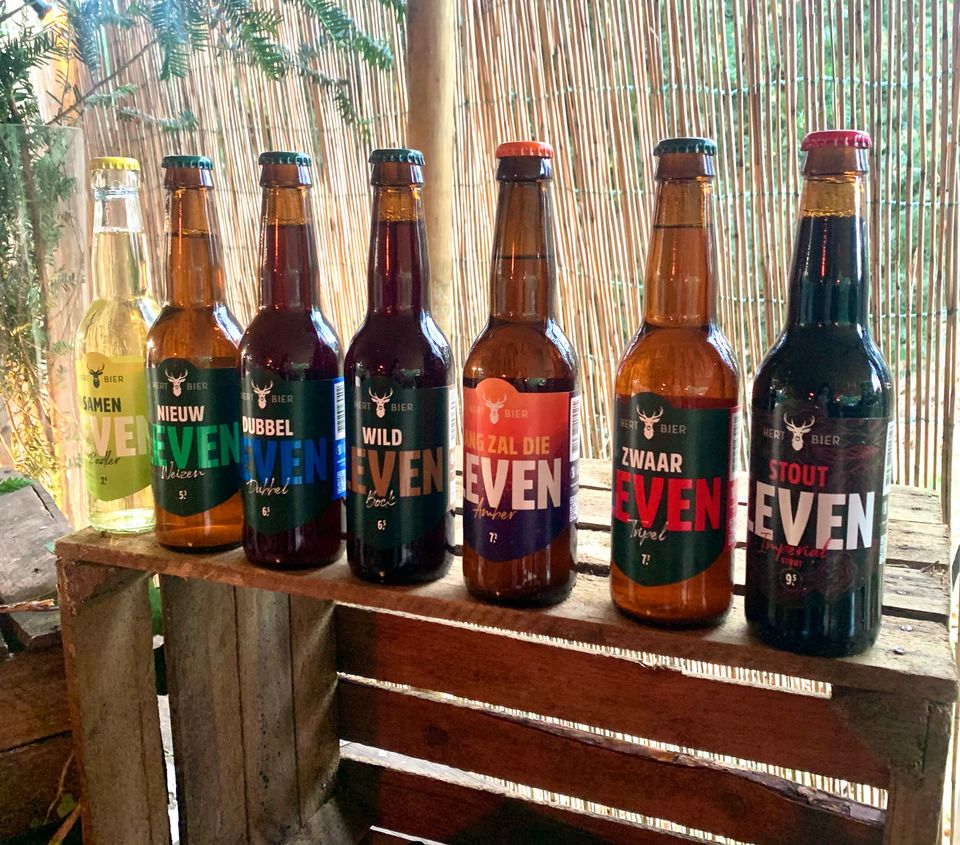
First I start with a Deer beer, as it has been staring at me since the moment we got back. Deer beer is brewed on the Veluwe and consists of several special beers with original names. I see a bokbier called 'Wild life' on display, but decide to go for a weizen called 'New life' anyway. I settle by the campfire and stare into the flames.
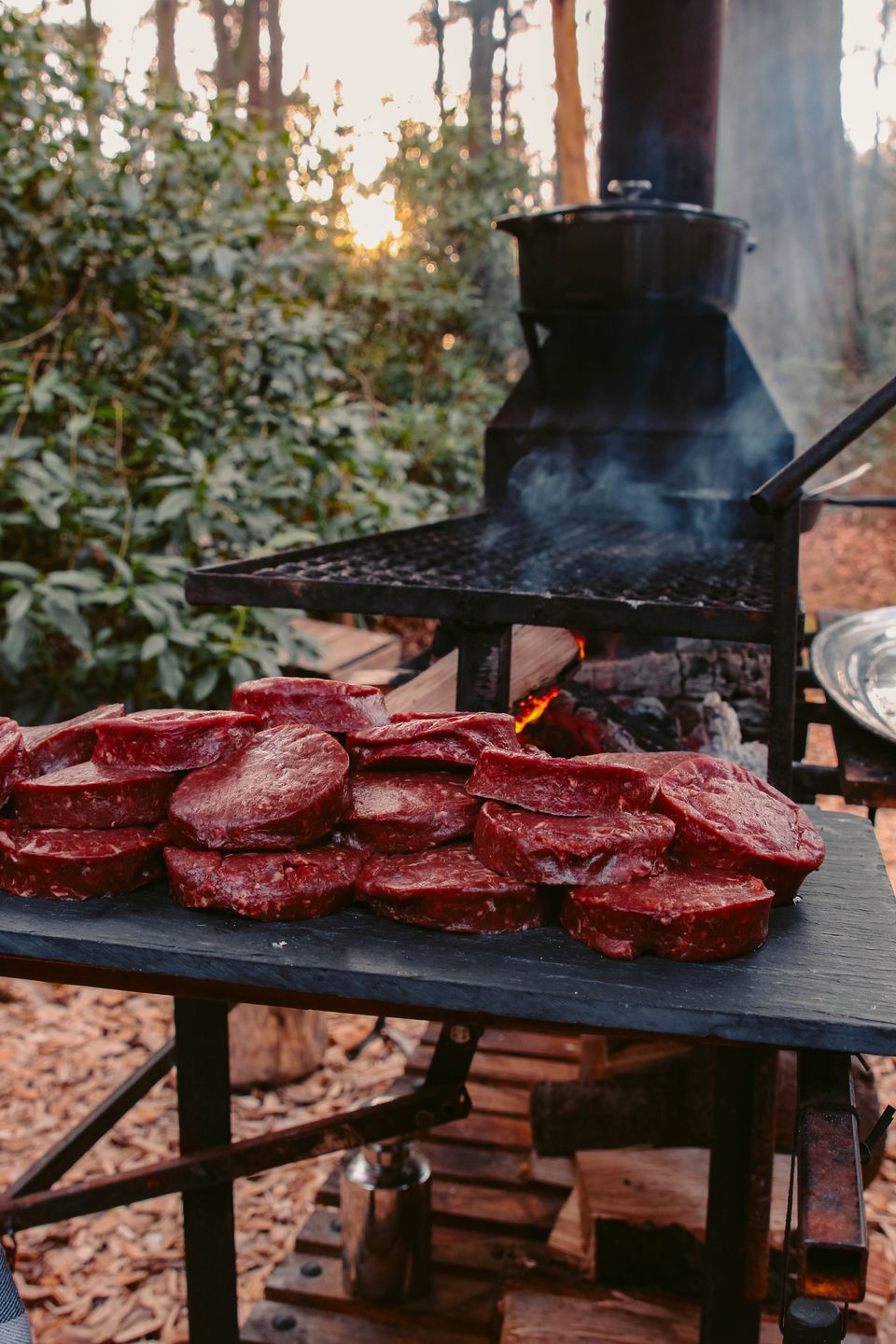
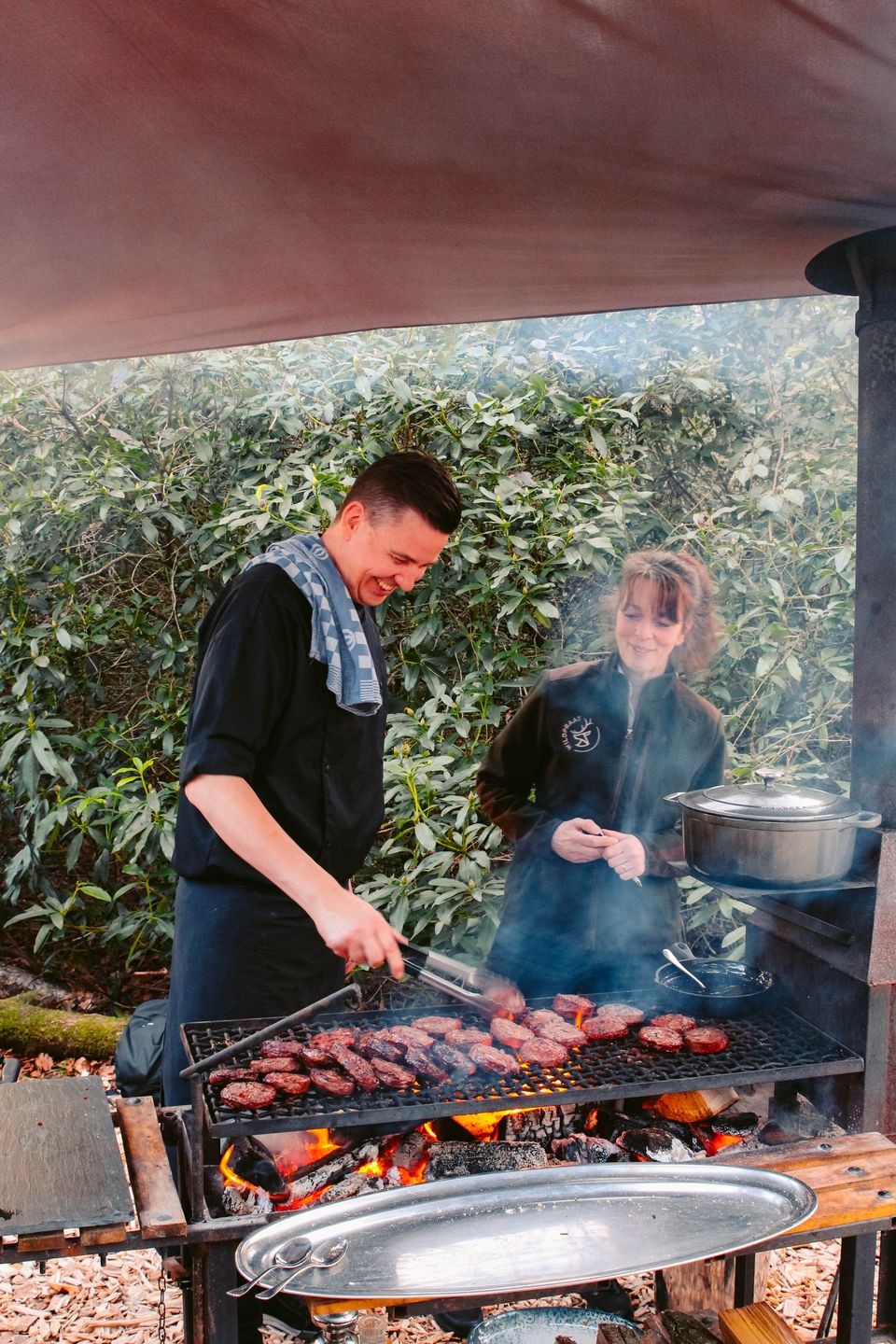
Not much later, it is our turn to brag. I take a little bit of everything to experience all the flavours. A piece of venison carpaccio, wild boar salad, potato salad with mushrooms and a fresh, crusty roll. Right after that, live chef Ronald and hostess Corina come by with venison burger from the barbecue, stew meat and wild boar. What a treat! With all the dishes, I taste the full, mild flavour of the meat. As if you really taste that the animals have lived in the wild. During dinner, we exchange experiences among ourselves. About this day, but also about life. Beautiful how different individuals can feel so connected together.
Full of satisfaction, we pack our things at eight o'clock, thank the organisation and walk to the car. What a wonderful day this was. It is fair to say that Game Talk stimulated all my senses. It was a special wildlife experience on the Veluwe.
Love,
Discover the Netherlands - Go into nature
-
5x nature excursions in Flevoland
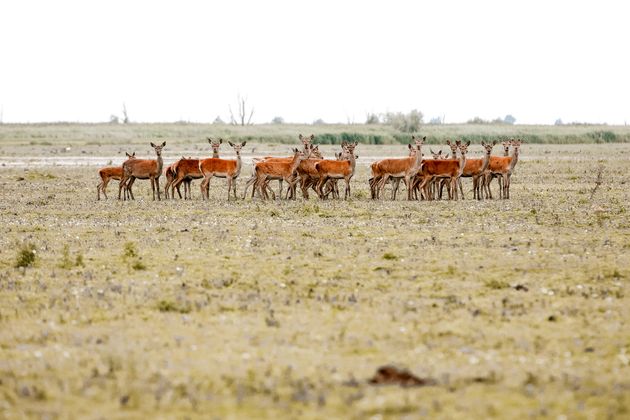
Honeyguide Amanda takes you to nature. In this blog, she shares 5 excursions you can do in Flevoland.
-
6x outings with the forest ranger
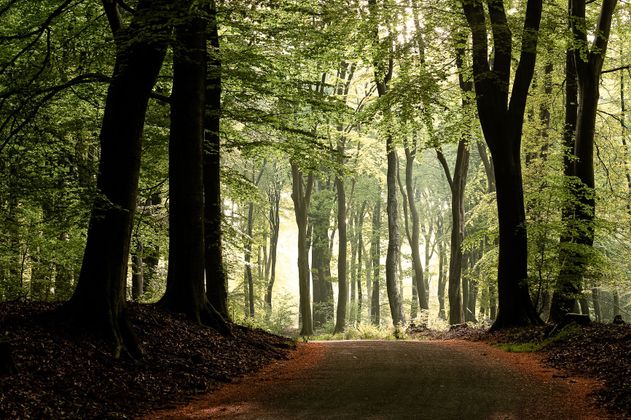
Always wanted to join a forest ranger? Then read the blog honeyguide Daphne. She tips you 6 different experiences.
-
7x adventures in the wilderness of the Netherlands
Wild horses, river forests and unpaved paths. Go on an adventure in the wilderness of the Netherlands. Honeyguide Brigitte has picked a few options for you.